
“All actors remain on stage unless prescribed otherwise. There is also a dead dog. With a fork in it. Scenes run into one another without interruption, regardless of alterations in space or time or chronology.” So begin the stage directions for The Curious Incident of the Dog in the Night-Time. When the lights come up, the dead dog is seen onstage.
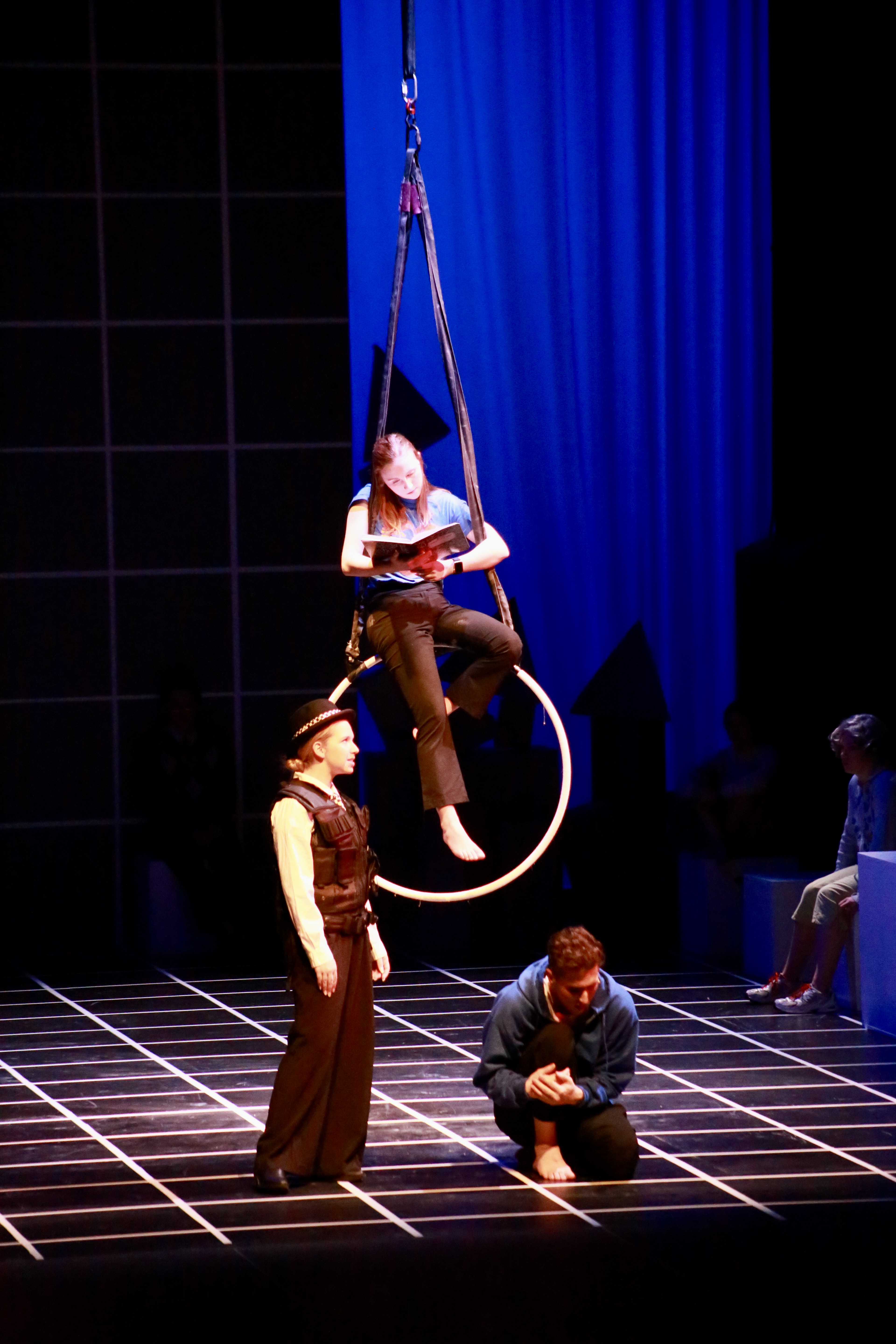
The Curious Incident of the Dog in the Night-time takes place in the year 2013 in and around the town of Swindon, England. The fifteen-year-old narrator of the story, Christopher John Francis Boone, discovers the slain body of his neighbor’s dog, Wellington, on the neighbor’s front lawn one evening and sets out to uncover the murderer. His investigation is at times aided, and at other times hampered, by the mild form of autism he lives with.
The Curious Incident of the Dog in the Nighttime, adapted by Simon Stephens, is the last play in HHS’s “Secrets Abound” season.
I first learned of this play back in 2012 when it was first produced by the National Theatre of Great Britain. My favorite physical theatre company, Frantic Assembly, was partnering with the National Theatre to create The Curious Incident of the Dog in the Nighttime. I immediately ordered the script and booked my tickets once it finally came to Broadway in 2014. Sitting there in the audience for that Tony Award-winning show was magical. It was inspiring, and I knew I wanted to create my own world of Christopher’s mind.
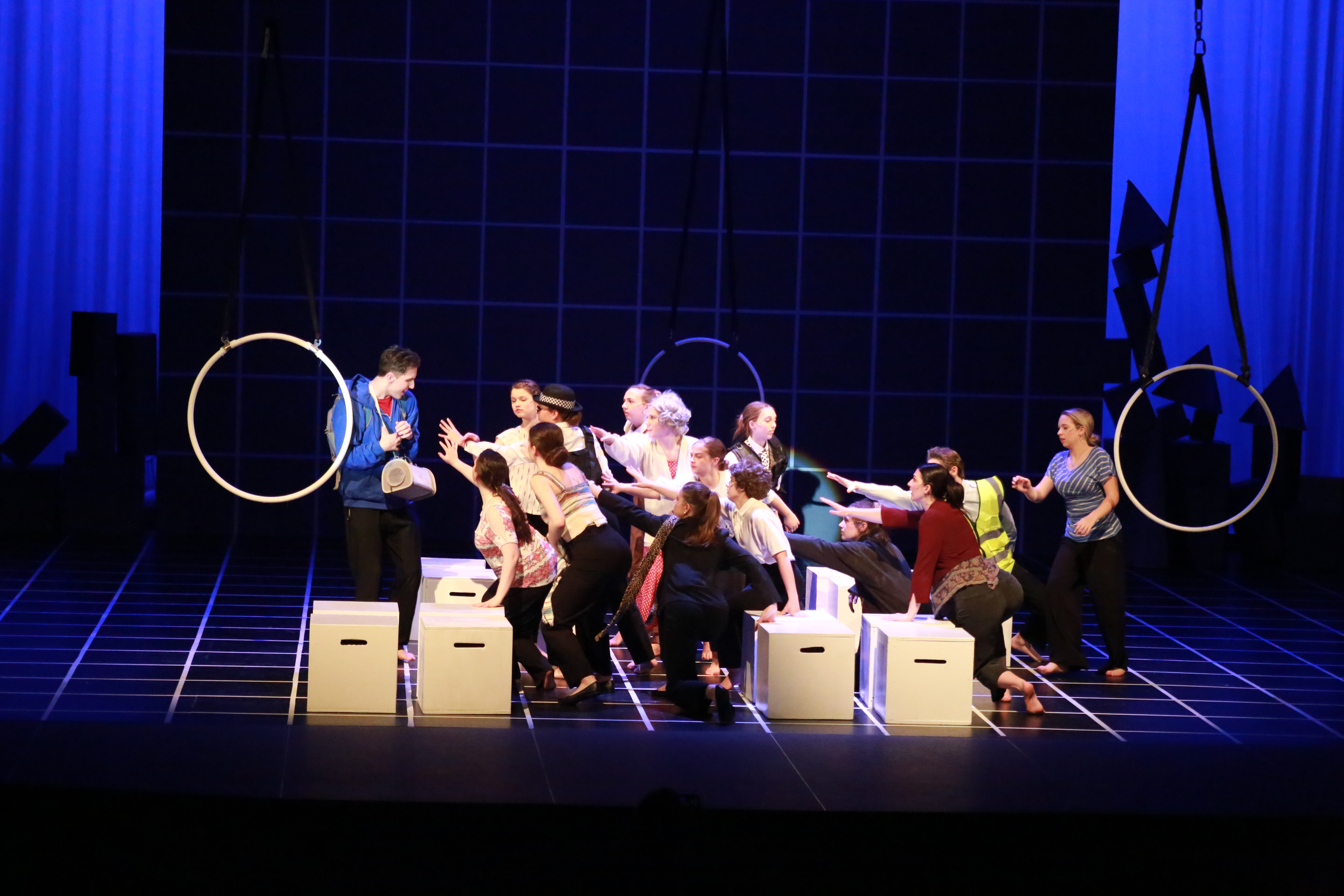
The play, as well as the book, never defines Christopher, never puts a label on him. So it is up to the interpretation of the actors, director, and audience to fully figure out Christopher. Based on his actions and his own feelings, we can determine that he’s neurodivergent and most likely on the Autism Spectrum.
The play is told from Christopher’s viewpoint, and he is onstage for the entire show. Christopher is a very literal person and, as he wrote this story, writing down only what he saw, and only that – there is very little interpretation on his part. Because of this, the other characters we meet are incomplete. The actors got to have fun creating them, deciding how they’d speak and what their emotions were.
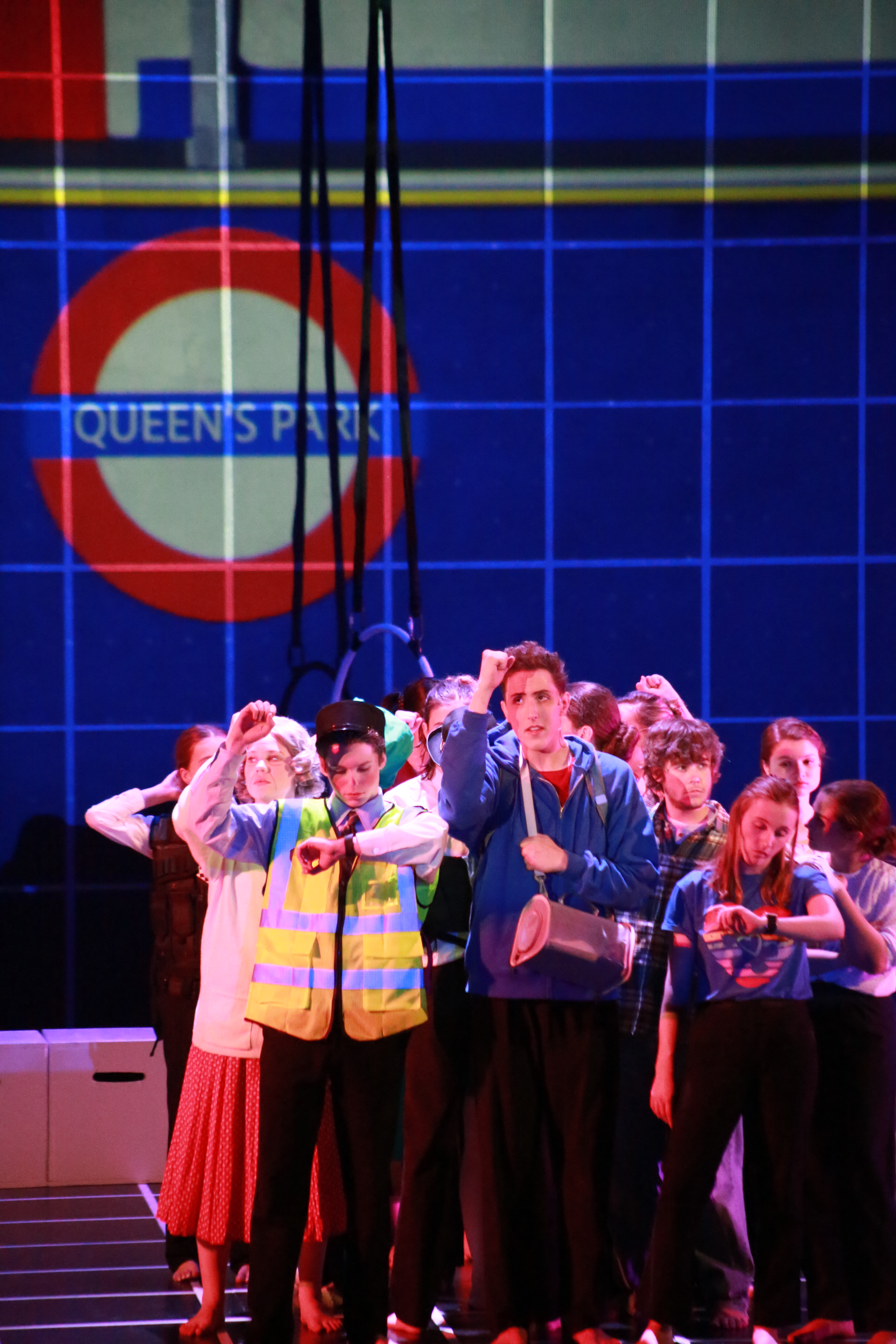
Christopher is different. Christopher is the story and the play. We see his mind and feel his feelings: happiness, anxiety, confusion and sadness. We tell Christopher’s story through movement, sound, and projections. Early on, the cast and I talked about how we didn’t like the portrayal of other Christopher’s they’d seen; it was very stereotypical and forced at times. So we decided not to try to “recreate autism.” Instead, we had everyone create a movement solo, and Aidan, our Christopher, took elements from those solos to create Christopher’s movements. You will also see those movements in other characters onstage. First, because the story is from Christopher’s perspective, but also because we all fall somewhere on the spectrum.
Come see our production of The Curious Incident of the Dog in the Nighttime May 1 and 2 at 7pm and May 3 at 1pm. Tickets are sold online or at the door.

